Home/Aerobic Systems
Aerobic Septic Systems (ATUs) in Gregg County
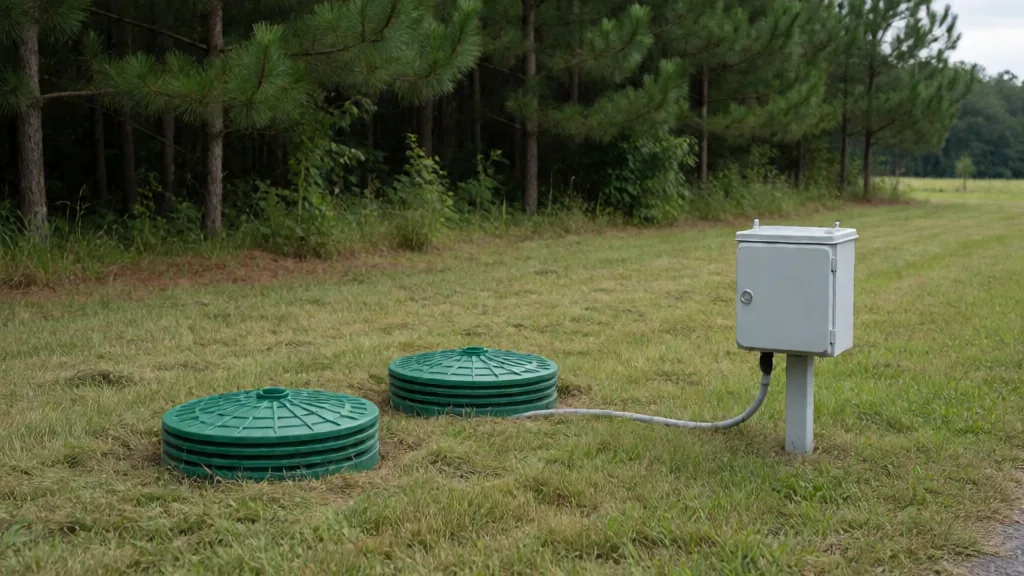
Four tanks doing the job that one tank plus good soil would have done for free.
That is the honest way to read what follows. A powered treatment system is not a better system in some abstract sense. It is the system you buy when the ground will not treat the water for you, and it earns its cost by producing effluent clean enough to be released into far less soil than a conventional field would need.
Two things push a Gregg County lot onto an aerobic system. The first is that clay subsoil: if the boring finds it shallow, there is not enough usable soil above it to treat the water, and a gravity drainfield cannot be permitted. The second is lot size. The county wants half an acre on community water, or a full acre if you are on a well, and once setbacks are taken off a tight lot there is frequently nowhere legal to put a conventional field even where the soil would allow one.
What owning one is actually like
-
Something is always running
The compressor runs continuously. It is on your power bill, it makes a noise, and when it stops the system stops treating: quietly, and without telling you, until the alarm goes.
-
There are consumables
Disinfection tablets get used up. A system that has run out is a system discharging undisinfected effluent onto the lawn, which is both the thing the design exists to prevent and a compliance problem.
-
There is a service schedule, and it is not advisory
Texas Health & Safety Code §366.0515 requires every aerobic system owner to keep an active contract with a licensed maintenance provider.
-
It shows up when you sell
A buyer's lender and inspector will ask about it, and the answers are on file with the authority. See inspections.
For a new aerobic install in Gregg County the maintenance agreement is part of the permit file from the start, alongside the Affidavit to the Public. The provider inspects on a set schedule and reports to the county. When the contract lapses, the county finds out, because the reports simply stop arriving.
Is it worth it?
It is not a choice on most lots that need one. If the soil report rules out a conventional field, the alternatives are a powered system, an engineered alternative like a mound, or not building. Where there is a genuine choice, the trade is a lower install cost and no running cost against a higher install cost and a permanent service obligation, and the right answer depends on how long you plan to own the place.
A licensed site evaluator has to answer that with a soil test; nobody can tell from a map. Send us your address and we will have local licensed pros quote the evaluation and the install. Request free quotes →