Home/Repair
Septic System Repair in Longview & Gregg County
"It failed suddenly" is almost never true. What is sudden is when you noticed.
Reading the symptoms
| What you see | What it usually means | Urgency |
|---|---|---|
| Sewage backing into the house | Blockage, or a completely failed field | Now |
| Standing water or soft ground over the field | The field can no longer absorb what it is given | Days |
| Smell outdoors, especially after rain | Effluent surfacing, or a venting problem | Days |
| Alarm sounding on a powered system | Pump, float, compressor or high water | Days |
| Slow drains or gurgling throughout the house | Tank full, outlet blocked, or field backing up | Days |
Keep people and animals off it, do not hose it into a ditch, and cut water use until somebody has looked at it. Request a quote →
Repairs in Gregg County: permits, and what the ground allows
USDA soil survey data for Gregg County rate about 149,000 of its roughly 176,000 acres “very limited” for septic absorption fields and none “not limited”. The two most widespread reasons are slow water movement (about 145,000 acres) and a saturated zone close to the surface (about 83,000 acres).
Outside city limits, repairs and replacements go through the Gregg County Health Department, and its 2026 order requires a permit and inspection for any repair, whatever the size of the tract. Inside an incorporated city the county order applies only where the city has contracted with the county, so ask the city who permits the work. Where a field has failed on clay, the replacement design starts with a new site evaluation of the soil that is there now, not the design that was approved for the old field.
Texas requires a permit and an approved plan to construct, alter, repair or extend an OSSF. The exception is an emergency repair to stop an immediate health hazard (a tank lid, an inlet or outlet device, a riser, a disinfection unit or a solid line): that work can start at once, but whoever does it must notify the permitting authority in writing within 72 hours.
County office: Gregg County Health Department, 405 East Marshall Avenue, Longview, TX 75601, (903) 237-2628.
Sources: USDA-NRCS Soil Data Access (SSURGO), septic tank absorption field ratings, queried 2026-10-23; Gregg County, Order Adopting Rules for On-Site Sewage Facilities, passed 31 March 2026; 30 TAC §285.3, general requirements; 30 TAC §285.35, emergency repairs; Gregg County: Septic Systems (program contact (903) 237-2628). Checked October 2026.
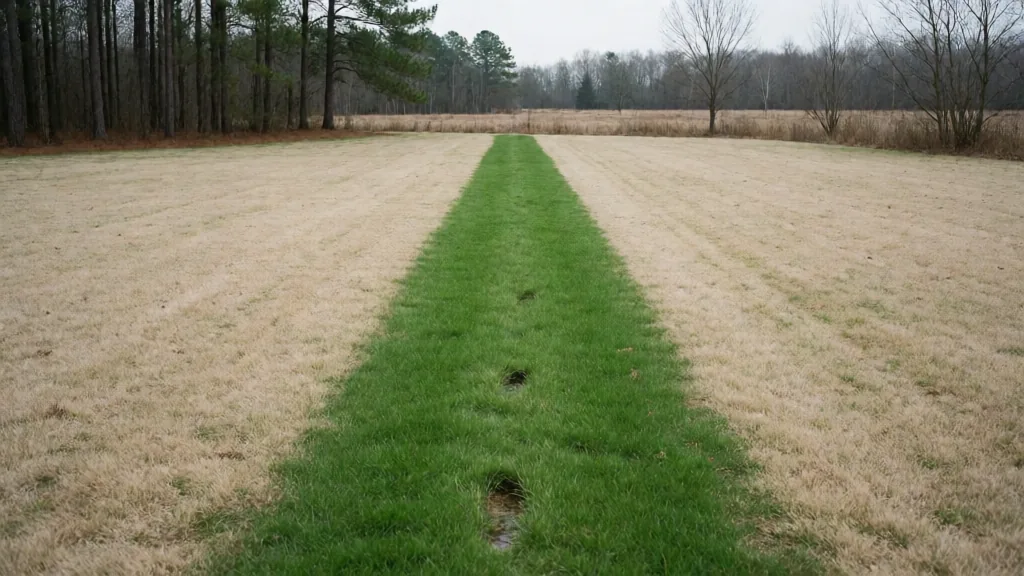
Repairable, or not
Pumps, floats, alarms, compressors, broken or crushed lines, blocked spray heads and a failed distribution box are components, and components get replaced. A drainfield sealed by biomat is different: no additive or machine reverses it, and what follows is a new field, a new evaluation and the permit process again. Be sceptical of any product sold as restoring a failed field; if it worked, it would be in the rules.